Global Medicine Use Trends to 2030: China's Rise, Specialty Therapies, and the Shift from Volume to Value
Global Medicine Use to Near 4 Trillion Daily Doses by 2030 as China’s Market Doubles and Specialty Therapies Reshape Spending
An IQVIA analysis reveals a fundamental decoupling of drug volume from spending, with China emerging as the fastest-growing major market and innovative treatments for oncology, immunology, diabetes, and obesity driving a historic pivot from volume-based consumption to value-based therapy mix.
Introduction: The Great Pivot in Global Medicine
Total global medicine consumption is on track to approach 4 trillion defined daily doses (DDDs) by 2030, according to the latest IQVIA report on global medicine use trends. This volume milestone, while significant in its own right, masks a far more consequential transformation underway: spending growth is increasingly decoupling from volume growth, as high-cost, innovative therapies reshape market dynamics from the ground up.
The IQVIA report, which draws on observed data through early 2025 and projects forward to 2030, provides the most authoritative baseline available for understanding where global medicine spending trends are heading. The headline finding is unmistakable: the world is pivoting from an era of "more pills for more people" to one of "more value per dose," with profound implications for pharmaceutical supply chains, manufacturing strategies, and market access frameworks.
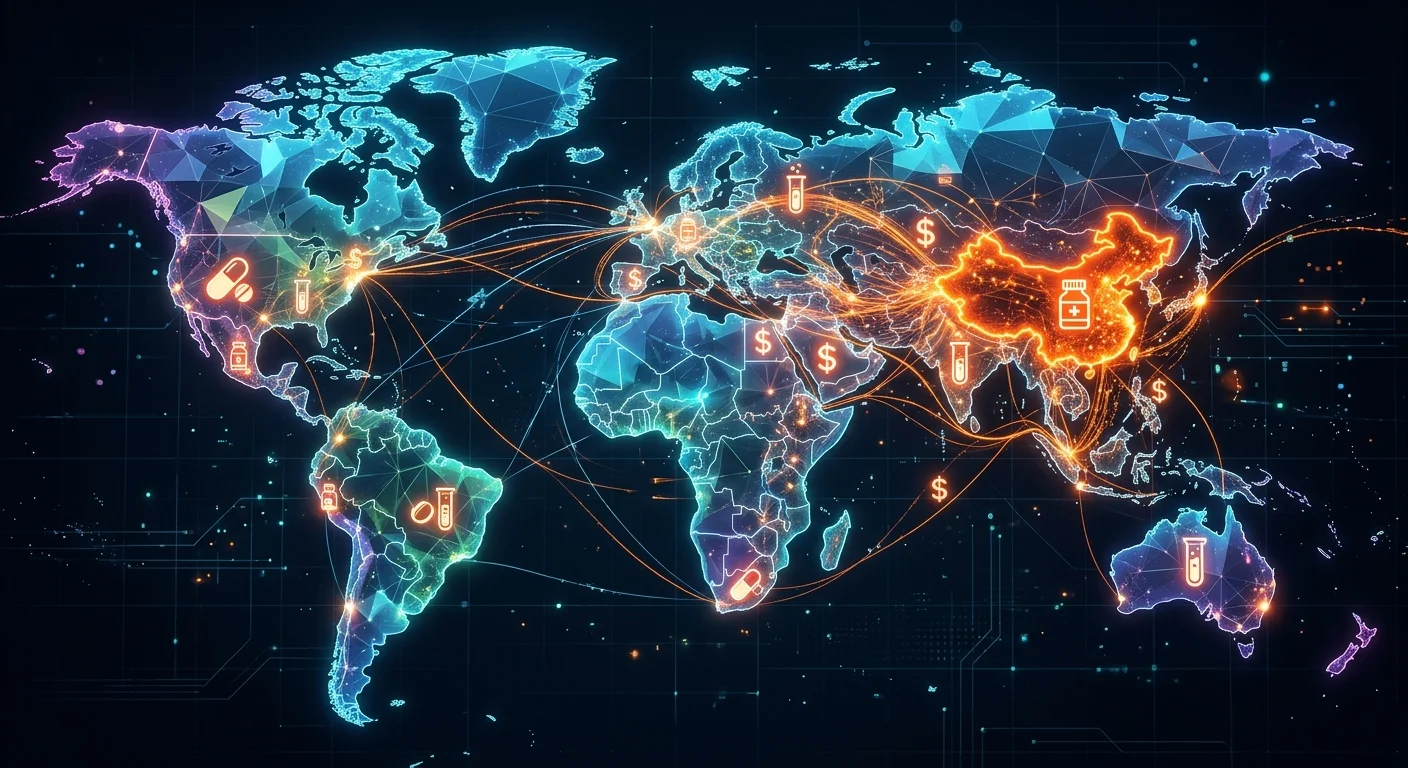
[IMAGE: World map with overlay of dosage counters and upward trend lines, emphasizing density in Asia and North America]
The shift is being driven by two parallel forces. First, the rapid expansion of treatment access in large emerging economies, particularly China, which is adding billions of daily doses to global consumption. Second, the accelerating adoption of specialty therapeutics —biologics, cell and gene therapies, and targeted small molecules—that command premium prices and are concentrated in high-burden disease areas. The result is a market where total doses grow modestly in many developed regions, yet total spending continues to rise sharply, fueled by the mix of therapies being used rather than the sheer number of prescriptions.
China’s Ascent: The Fastest Growing Market and Its Impact
Nowhere is the transformation more visible than in China. According to the IQVIA data, China’s medicine usage index—a normalized measure of total daily doses consumed—is projected to reach 196 by 2030, using 2020 as a baseline of 100. That represents a near doubling in just ten years, a pace unmatched by any other major pharmaceutical market.
Several structural factors underpin this growth. China’s aging population is expanding the pool of patients requiring chronic disease management, while the government’s sustained investments in healthcare coverage—including the expansion of the National Reimbursement Drug List and the centralized volume-based procurement (VBP) program—have lowered out-of-pocket costs and broadened access to essential medicines. At the same time, rising prevalence of non-communicable diseases such as diabetes, hypertension, and certain cancers is driving demand for both generic and innovative therapies.
[IMAGE: Bar chart comparing annual growth rates (2020–2030) for China, North America, Western Europe, and Japan, with China’s bar markedly higher]
This explosive expansion stands in sharp contrast to higher-income regions. North America, Western Europe, and Japan are all experiencing slow or stagnant volume growth, reflecting market saturation, aggressive cost-containment measures by payers, and a demographic profile that has already aged through the peak chronic-disease years. In these markets, volume growth is often limited to single-digit percentages over the entire decade, while spending growth is concentrated almost entirely in the specialty therapeutics segment.
China’s rise is not merely a story of volume. The country is also becoming an increasingly important player in the innovation ecosystem. Local biotech firms are ramping up R&D in oncology, immunology, and metabolic disease, and the government is actively encouraging domestic production of biosimilars and novel biologics. This dual role—as both a massive consumption market and a growing innovation hub—positions China to shape global pharmaceutical supply chain dynamics in ways that were unimaginable a decade ago.
The Engine of Spending: Innovative Therapeutics in Four Key Areas
While volume growth in emerging markets provides the foundation for the global consumption milestone, the primary driver of spending growth across all regions is a cluster of high-cost therapeutic areas: oncology, immunology, diabetes, and obesity. According to IQVIA, these four categories account for the largest share of incremental spending through 2030, propelled by a wave of biologic drugs, cell and gene therapies, and GLP-1 receptor agonists.
Oncology remains the single largest spending category, driven by the relentless pace of innovation in targeted therapies and immuno-oncology agents. Immunological diseases such as rheumatoid arthritis, psoriasis, and inflammatory bowel disease continue to attract investment in novel biologics and small molecules that offer improved efficacy and safety profiles. Meanwhile, diabetes and obesity have exploded into the spotlight with the remarkable success of GLP-1 drugs—semaglutide, tirzepatide, and their successors—which are now being studied for indications beyond metabolic disease, including cardiovascular protection and even addiction.
[IMAGE: Infographic with four icon clusters (cancer cell, immune cell, insulin syringe, weight scale) connected by arrows showing escalating spending projections]
These therapies command premium prices that are orders of magnitude higher than traditional small-molecule generics. A single course of a CAR-T cell therapy can cost hundreds of thousands of dollars, while chronic use of a GLP-1 drug can run into tens of thousands per year. The cumulative effect is that spending growth is increasingly concentrated in a relatively small number of high-value patients, shifting the cost burden from health systems and payers onto patients in many markets and exposing persistent gaps in access.
Innovation in these four areas remains concentrated in developed markets—the United States, the European Union, and Japan—but that is changing. China and other emerging economies are rapidly building local R&D capabilities, often through partnerships with multinational firms or via homegrown biotech startups that have attracted substantial venture capital. The IQVIA report 2030 notes that the number of clinical trials initiated in China for novel oncology agents has more than doubled since 2020, signaling a shift in the geography of drug development.
From Volume to Mix: The New Economic Logic of Pharmaceuticals
The most fundamental insight from the IQVIA analysis is the transition from volume-driven growth to mix-driven growth. In most geographies, the era in which pharmaceutical revenue expanded mainly because more prescriptions were written is ending. Instead, revenue growth is now driven by a change in the composition of prescriptions—specifically, the increasing share of high-cost specialty drugs relative to low-cost generics.
This shift has profound economic consequences for every player in the ecosystem. For generic manufacturers, the model of high volumes at razor-thin margins becomes increasingly less viable without a strategic pivot into specialty therapeutics and biosimilars. Those that have invested in complex manufacturing capabilities for injectables, hormonal therapies, and biologics are better positioned to capture value in the new landscape. Those that remain tethered to simple oral solids face relentless margin compression as procurement systems—particularly in emerging markets—continue to force prices toward marginal production costs.
The volume to value shift also rewrites the rules for brand-name drug manufacturers. The blockbuster model that dominated the 1990s and 2000s—a single drug generating billions in revenue through mass primary-care prescribing—is giving way to a portfolio of highly targeted, high-cost therapies that serve smaller patient populations but command far higher per-patient revenue. This has implications for R&D portfolio management, regulatory strategy, and commercial organization.
[IMAGE: Sankey diagram showing flow from volume-based growth (many low-cost prescriptions) to mix-based growth (fewer but higher-cost prescriptions) over time]
For health systems and payers, the transition creates new affordability challenges. In the volume-based model, total spending was relatively predictable and could be managed through formulary controls and generic substitution. In the mix-based model, a single patient started on a specialty biologic can add tens of thousands of dollars in annual spending, making budget impact analysis and outcomes-based contracting essential. Many developed-market payers are already implementing specialty pharmacy tiers, prior authorization requirements, and step therapy protocols to manage costs, but the pressure will only intensify as the pipeline of innovative therapies continues to expand.
Supply Chain Implications: Cold Chains, Biologics Manufacturing, and Raw Material Sourcing
The pivot from volume to mix is not just an economic abstraction—it has tangible, operational consequences for the pharmaceutical supply chain. Specialty biologics, cell and gene therapies, and GLP-1 drugs require manufacturing processes that are fundamentally different from those used for traditional small-molecule tablets. Cold-chain logistics, sterile filling, and complex biological production systems become the new norm, demanding investments in infrastructure and expertise that many supply chain operators have not yet made.
For biologics, the shift means a growing reliance on single-use bioreactors, continuous manufacturing processes, and highly controlled storage and transport environments. A temperature excursion of even a few degrees can destroy a batch of monoclonal antibodies worth millions of dollars, making supply chain reliability a matter of financial survival as well as patient safety. Companies that have not invested in advanced cold-chain capabilities—including temperature-controlled warehousing, real-time monitoring sensors, and blockchain-based traceability—will face increasing risk as the therapy mix tilts toward biologics.
The specialty therapeutics trend also places new demands on raw material sourcing. Complex molecules require high-purity reagents, specialized excipients, and—in the case of cell and gene therapies—patient-derived biological starting materials that are inherently variable. The supply chain for these inputs is far more concentrated and vulnerable than the generic global market for active pharmaceutical ingredients (APIs), which has long been dominated by a handful of manufacturers in India and China. Disruptions—whether from geopolitical tensions, trade policy, or natural disasters—can have outsized impacts on the production of high-value therapies.
For emerging markets like China, the volume to value shift presents both an opportunity and a challenge. The country is already the world’s largest producer of many APIs and generic drugs, but its manufacturing infrastructure for biologics is still maturing. The government has identified advanced biopharmaceutical manufacturing as a strategic priority and is investing heavily in training, facility construction, and regulatory modernization. If successful, China could emerge as a major supplier of biosimilars and even originator biologics to global markets, fundamentally altering existing supply chain dependencies.
[IMAGE: Flowchart showing cold-chain logistics pathway from manufacturing to patient, with temperature monitoring nodes and risk alerts]
Broader Implications for Health Systems and Industry Players
Taken together, these trends paint a picture of a global pharmaceutical market that is more dynamic, more complex, and more fractured than at any time in recent history. The convergence of China’s rapid market expansion with the specialty therapeutics revolution and the volume to value shift is creating a new set of winners and losers.
For multinational pharmaceutical companies, the imperative is clear: invest in innovation in high-value therapeutic areas, build a presence in the China pharmaceutical market as both a commercial destination and a development partner, and reconfigure global supply chains to handle the logistical demands of biologics and cell therapies. The companies that can successfully integrate these three priorities will be best positioned to capture the growth that IQVIA projects through 2030.
For payers and governments, the challenge is affordability without stifling innovation. The rising share of spending on high-cost therapies—particularly in oncology, immunology, diabetes, and obesity—will force difficult decisions about coverage, reimbursement, and patient access. Value-based pricing, outcomes-based contracts, and differential pricing across markets are likely to become more common, though each of these approaches carries its own implementation challenges.
For patients, the trends are a double-edged sword. On one hand, the explosion of innovation means that many diseases that were once untreatable are now manageable, and some that were fatal are now curable. On the other hand, the high cost of these therapies creates new barriers to access, not only in low-income countries but also in developed markets where insurance coverage is incomplete or subject to high out-of-pocket maximums. The global drug usage outlook to 2030 is one of remarkable therapeutic potential, but realizing that potential will depend on the ability of health systems to extend the benefits of innovation broadly, rather than concentrating them among the wealthiest.
Conclusion: A Decade of Restructuring
The IQVIA report’s projection of nearly 4 trillion daily doses by 2030 is a number that captures the immense scale of global medicine use. But the real story is not the number itself—it is the restructuring that underlies it. China’s ascent to a dominant market position, the triumph of specialty therapies as the engine of spending growth, and the decisive shift from volume-based to mix-based consumption are together reshaping the economics of the pharmaceutical industry.
For all stakeholders—manufacturers, payers, policymakers, and patients—the next five years will be a period of intense adaptation. The supply chain that delivers medicines to patients will need to become more flexible, more resilient, and more specialized. The business models that have sustained the industry for decades must evolve, or be disrupted by those that do. And the social contract around access to innovative therapies will require renegotiation, as the gap between what science can achieve and what health systems can afford continues to widen.
The great pivot in global medicine has already begun. By 2030, its full contours will be unmistakable—and the choices made today will determine who benefits most from the transformation ahead.